

In Cormac McCarthy’s The Road, a father walks a dead world with his small son, and everything terrible he is capable of — and he is capable of a great deal — exists for one purpose: keeping the boy alive. McCarthy calls it carrying the fire.
I have never read a truer picture of what a father’s strength is actually for. Not to be displayed. To be spent, quietly, on someone smaller than you.
This is the second of my notes on tender strength, and this week I want to talk about fathers, because the tenderest thing a powerful man does is often the thing he refuses to be.
In my saga, the deadliest man who ever lived spent thirty years trying to be a rancher.
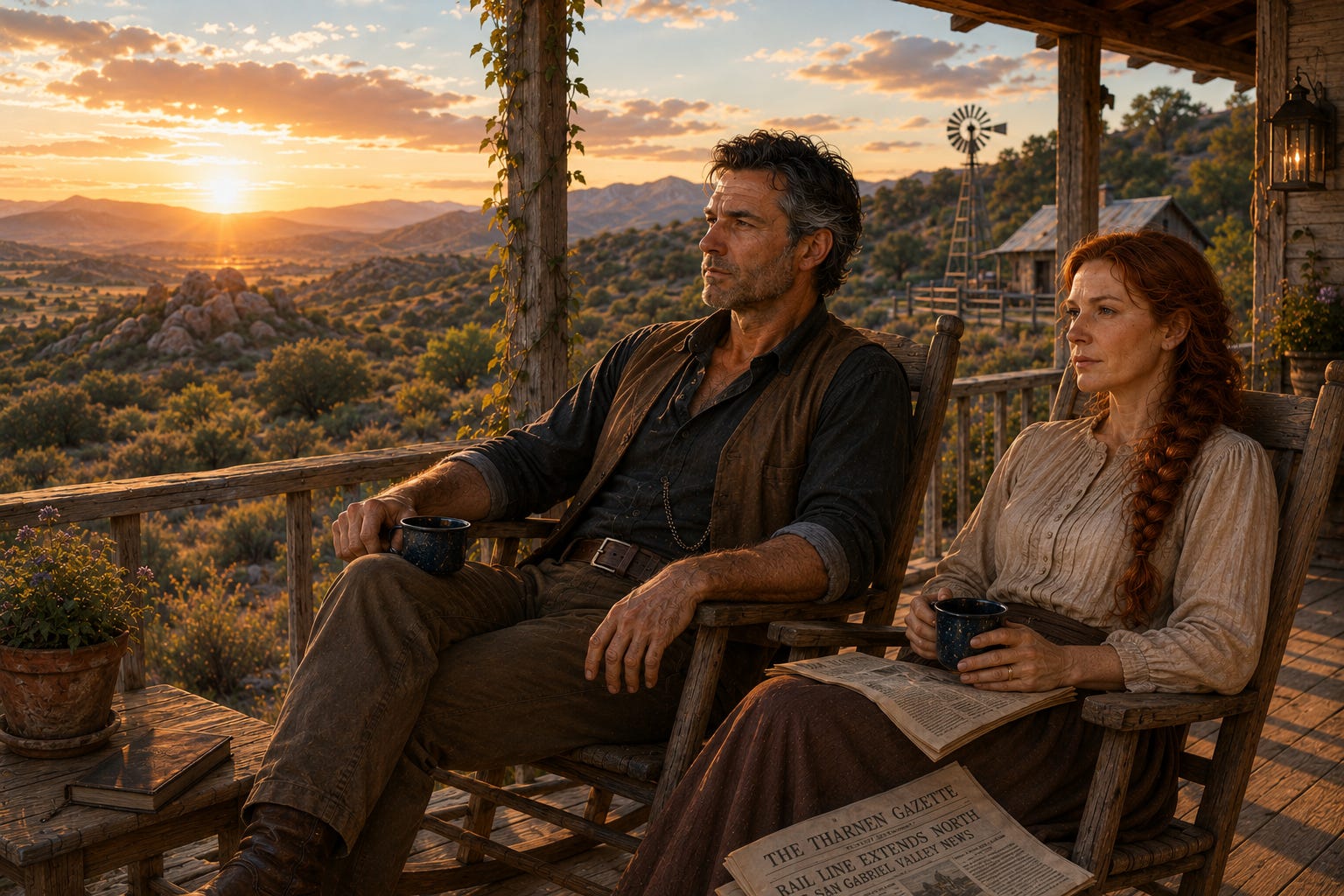
Joseph Tharnen was the Reaper. The supreme military commander of the most powerful army on the planet. From the time he was fourteen until sometime in his mid-thirties, all he knew was war. Then he laid it down. He and his wife ran from that life, bought hard country, and raised cattle and three children on it.
His kids grew up thinking their father was a quiet man, good with his hands and calm in a crisis, which he was. What they didn’t know was everything else. He had sworn they never would. Family dinners, calving in the cold spring, teaching the little ones to ride a horse: that was the life he chose over the one that made him a legend. It takes a particular strength to be the most dangerous man alive and spend all of it on being a father nobody looks at twice.
That is the fatherhood I find myself drawn to writing. Marilynne Robinson’s Gilead is an old preacher’s letter to a son he won’t live to see grown. Page after page of a strong man made gentle by how much he loves a boy who won’t remember him. Wendell Berry’s farmers love their children the way they love their land: patiently, across seasons, and never for applause. None of these men are soft. Their gentleness is the most muscular thing about them.
But I don’t want you to think of these men as larger-than-life posters, so here is the hard part I wish wasn’t true. A father can do everything right and still leave a mark.
Joseph hid his past to protect his children. It was a loving choice, probably the only one that made any sense. And it still cost. A boy who grows up beside a father that immense, and is never told why, can come to believe he is lacking. That is exactly the wound I wrote about last week. Joseph gave his children peace. He could not also give them the one explanation that would have told them their doubts were a lie. Nobody warns you about that part of fathering: you can love a child perfectly and still not spare him everything. Sometimes the very act of protecting him is what leaves a bruise.
I don’t think that makes Joseph a failure. I think it makes him a father. The gentle strong ones aren’t the ones who get it flawless. They are the ones who lay their strength down for someone smaller, knowing they can’t cover every gap, and do it anyway, trusting in the Light to make up for their shortfalls. That, in my opinion, is real masculinity. Something I wish I had more of.
That’s a fire worth carrying. More next week.